Game guide · HKXLJJ
Shikaku: rules and examples
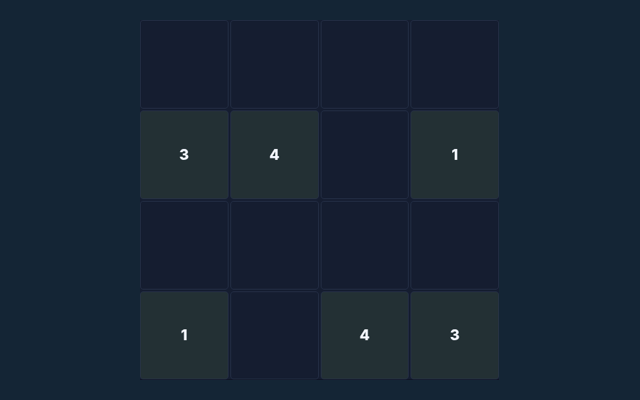
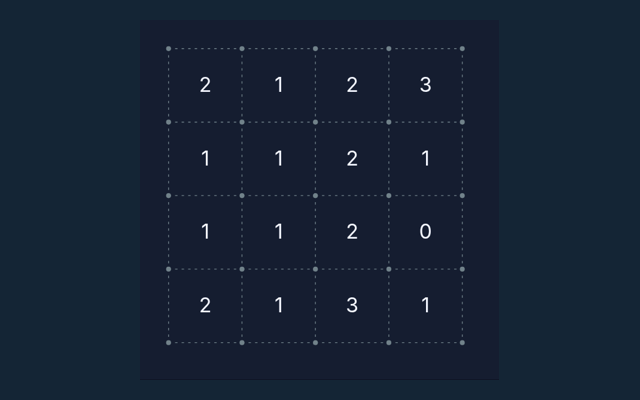
Start Shikaku by looking at the playing area and its controls. Cover the board with non-overlapping rectangles, each containing one clue equal to its area. Use the example below to understand a decision. Compare the starting position with the example in the Guide. Check the relevant rule before repeating a move.
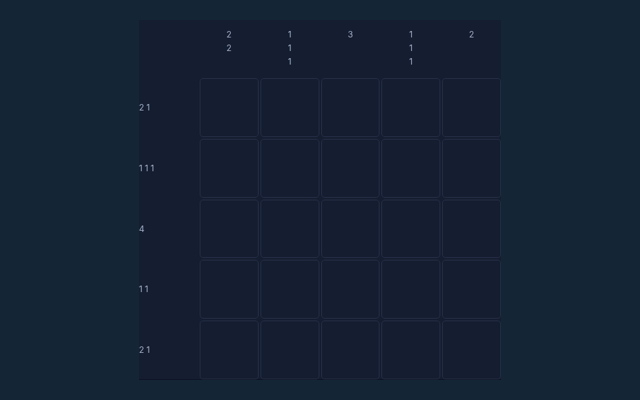
Solve ten 5×5 rectangle puzzles. Each clue belongs to exactly one rectangle of the stated area.
Give this approach a try
Locate the buttons and input area before beginning a long round. Use the on-screen labels to avoid an accidental restart. Make the next step deliberately.
What you are aiming for
Cover the board with non-overlapping rectangles, each containing one clue equal to its area. Use the instructions to see which actions move you towards it. Notice how the game responds to your input.
From the start of a round
- Choose a rectangle’s opposite corners.
- It must contain one clue and have the matching area.
- Click an existing rectangle to remove it.
- Cover every square to finish.
Using the playing area
Click or tap squares or graph edges. Number boards include a digit pad. Undo reverses the previous change; Check puzzle validates the solution. On a smaller screen, keep the active part of the board within view. Use one clear input at a time.
One way to understand the rules
A clue 6 may occupy a 2×3 rectangle when other clues allow it. Compare this with the rule that governs the move. Look for the relevant detail.
A common point of confusion
No rectangle may contain two clues or overlap another. Take a moment to reassess the position before continuing. Choose one rule to keep in mind for this round. Apply it consistently rather than guessing what another version might allow.
A few questions answered
While learning, what is the goal of Shikaku?
Cover the board with non-overlapping rectangles, each containing one clue equal to its area.
As a new player, how do I control Shikaku?
For clarity: Click or tap squares or graph edges. Number boards include a digit pad. Undo reverses the previous change; Check puzzle validates the solution.
As a new player, what example helps explain Shikaku?
A clue 6 may occupy a 2×3 rectangle when other clues allow it.
For a quick reminder, what should I watch out for in Shikaku?
The key detail is this: No rectangle may contain two clues or overlap another.
On this playing page, what format does Shikaku offer?
The key detail is this: Solve ten 5×5 rectangle puzzles. Each clue belongs to exactly one rectangle of the stated area.
For my first round, which play mode does Shikaku use?
The key detail is this: The mode on this page is Solo. Same-device play uses one screen; this game library does not provide internet matchmaking.
On this playing page, where should I start with Shikaku?
Here is the relevant explanation: Choose a rectangle’s opposite corners.
While learning, do I need an account or a payment for Shikaku?
For clarity: No player account or payment is needed. Game scores are recreational results, not cash prizes.
While learning, how can I find Shikaku again?
Keep this in mind: Use the Games list or save this game page in your browser bookmarks. The Guide is linked from the playing page.
For my first round, how do I report an issue with Shikaku?
Here is the relevant explanation: Use the contact form and include the game name, browser, device and the actions that led to the issue. Do not send passwords or payment details.